But Why – A show for curious kids
Why do flamingos stand on one leg?
5/22/2026 | 1m 28sVideo has Closed Captions
Why do flamingos stand on one leg? Asks Claire from Boston.
Big birds like flamingos can be a little funny. For one, they're PINK! And they are BIG! But they also spend a lot of time famously propped up on one leg. Scientists have some theories behind why that is, but what's YOUR idea?
Problems playing video? | Closed Captioning Feedback
Problems playing video? | Closed Captioning Feedback
But Why – A show for curious kids is a local public television program presented by Vermont Public
But Why – A show for curious kids
Why do flamingos stand on one leg?
5/22/2026 | 1m 28sVideo has Closed Captions
Big birds like flamingos can be a little funny. For one, they're PINK! And they are BIG! But they also spend a lot of time famously propped up on one leg. Scientists have some theories behind why that is, but what's YOUR idea?
Problems playing video? | Closed Captioning Feedback
Where to Watch But Why – A show for curious kids
But Why – A show for curious kids is available to stream on pbs.org and the PBS app.
Providing Support for PBS.org
Learn Moreabout PBS online sponsorshipMore from This Collection
Answering your favorite questions about animals and insects.

How do snails get their shells?
Video has Closed Captions
How do snails get their shells? Asks Aria from Michigan. (2m 20s)
Video has Closed Captions
How do horses gallop? Asks Parker from Wisconsin. (3m 19s)
Are there animals or plants that can live forever?
Video has Closed Captions
Are there animals or plants that can live forever? Asks Eleanor from New York. (2m 25s)

Why are horseshoe crabs called crabs?
Video has Closed Captions
Why are horseshoe crabs called crabs? Asks Eva from Canada. (1m 54s)

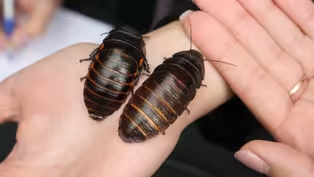
What's cool about cockroaches?
Video has Closed Captions
Why are cockroaches so yucky? Asks Rosie from China. (2m 2s)
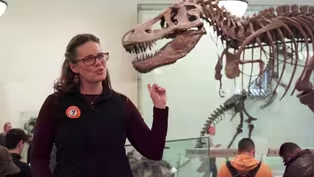
Why do T-Rexes have small arms?
Video has Closed Captions
Why do T-Rexes have small arms? Asks Grigor from Switzerland. (2m 1s)

Video has Closed Captions
Why do cats have whiskers? Asks Bryce of Georgia. (1m 59s)
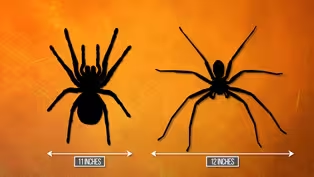
What is the biggest spider in the world?
Video has Closed Captions
What is the biggest spider in the world? Asks Mia from Massachusetts. (1m 28s)
Video has Closed Captions
Do all jellyfish sting? Asks Clinton from California. (1m 51s)
Providing Support for PBS.org
Learn Moreabout PBS online sponsorshipWhy do flamingos stand on one leg?
Standing on one leg like this is seriously tiring and not all that easy.
At least not for a long time.
But some birds do it for hours.
Believe it or not this has been a tough question for scientists to answer.
There are a few main theories, each with competing studies.
One.
They do it for warmth.
Water can get cold, and birds can lose heat through their feet.
So keeping half your feet out of the water could help you maintain your body heat... If you're a flamingo.
Two.
When they sleep, half their brain shuts down.
So maybe that lifted leg is just kind of a byproduct of only using half their brain.
The half that includes the standing leg or three.
It's physiologically easier.
Recent research has shown that the way flamingos bodies are structured, it's less tirin and easier to balance with one leg tucked up and the other one straight underneath them.
Imagine if that was the easies way for you to stand for hours.
Current consensus mostly favors option three, that this is the most efficient way for them to relax.
It looks like it actually takes no muscle activit for flamingos to stand that way, which is definitely not the case for me.
To make sure you never miss But Why, like this video and subscribe to our channel and find out more at butwhykids.org.
 New Episode
- Science and Nature

Explore scientific discoveries on television's most acclaimed science documentary series.














Support for PBS provided by:
But Why – A show for curious kids is a local public television program presented by Vermont Public